Explore Our ARTISTS
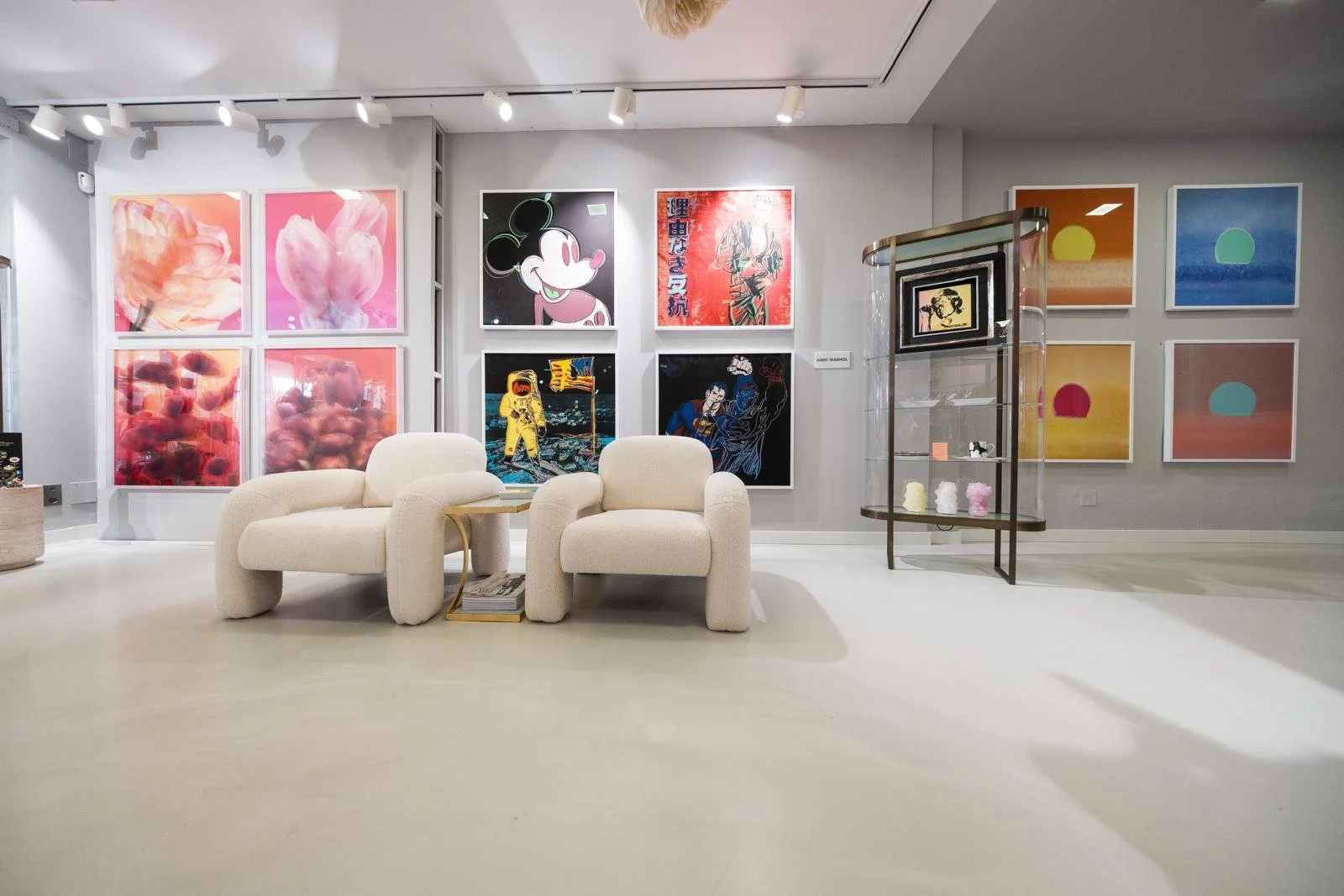
ONLY ORIGINALS ARE WORTH TO BE COLLECTED. EVERY PIECE OF ART WAS SELECTED AND CURATED CAREFULLY.
-
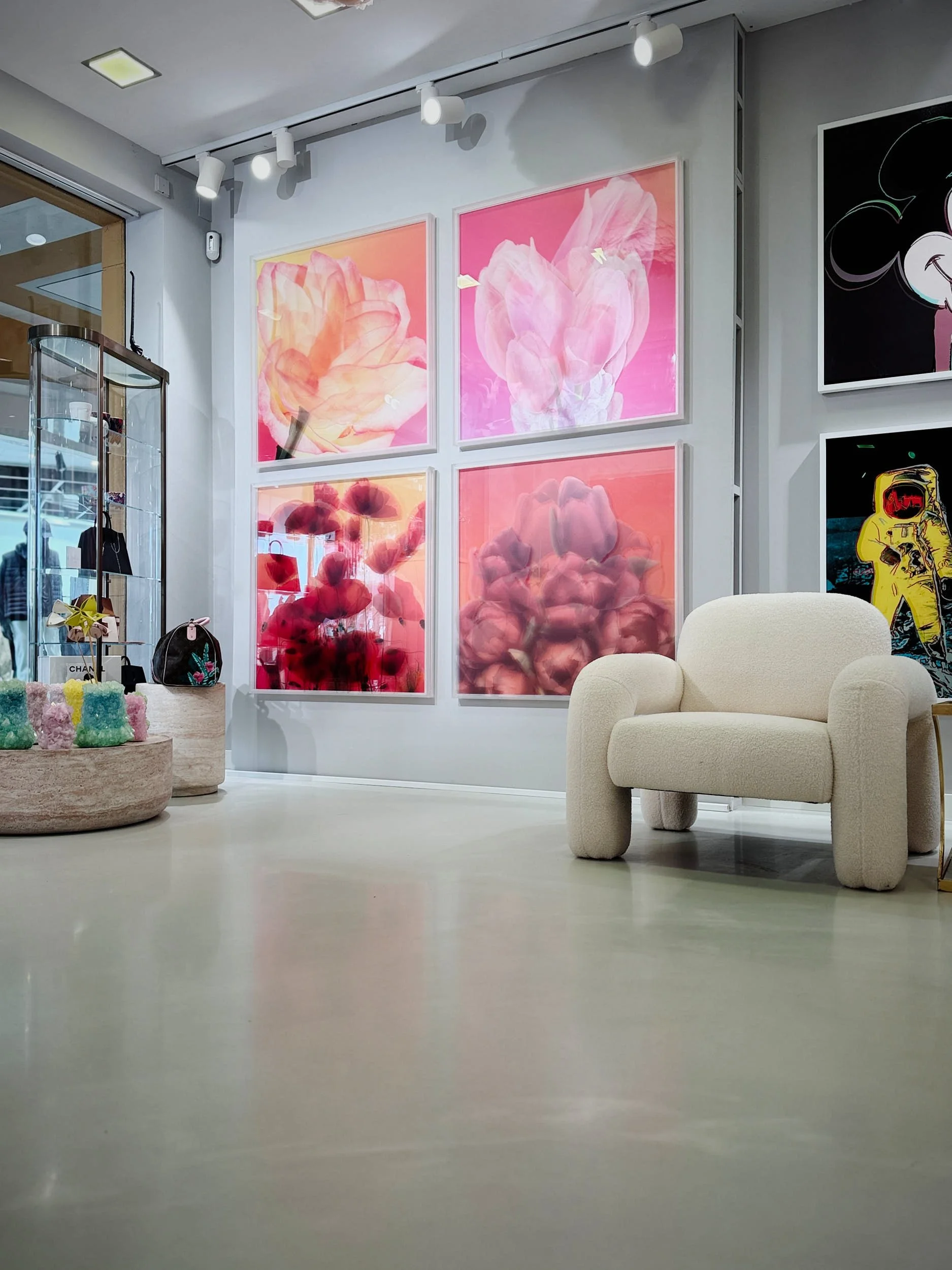
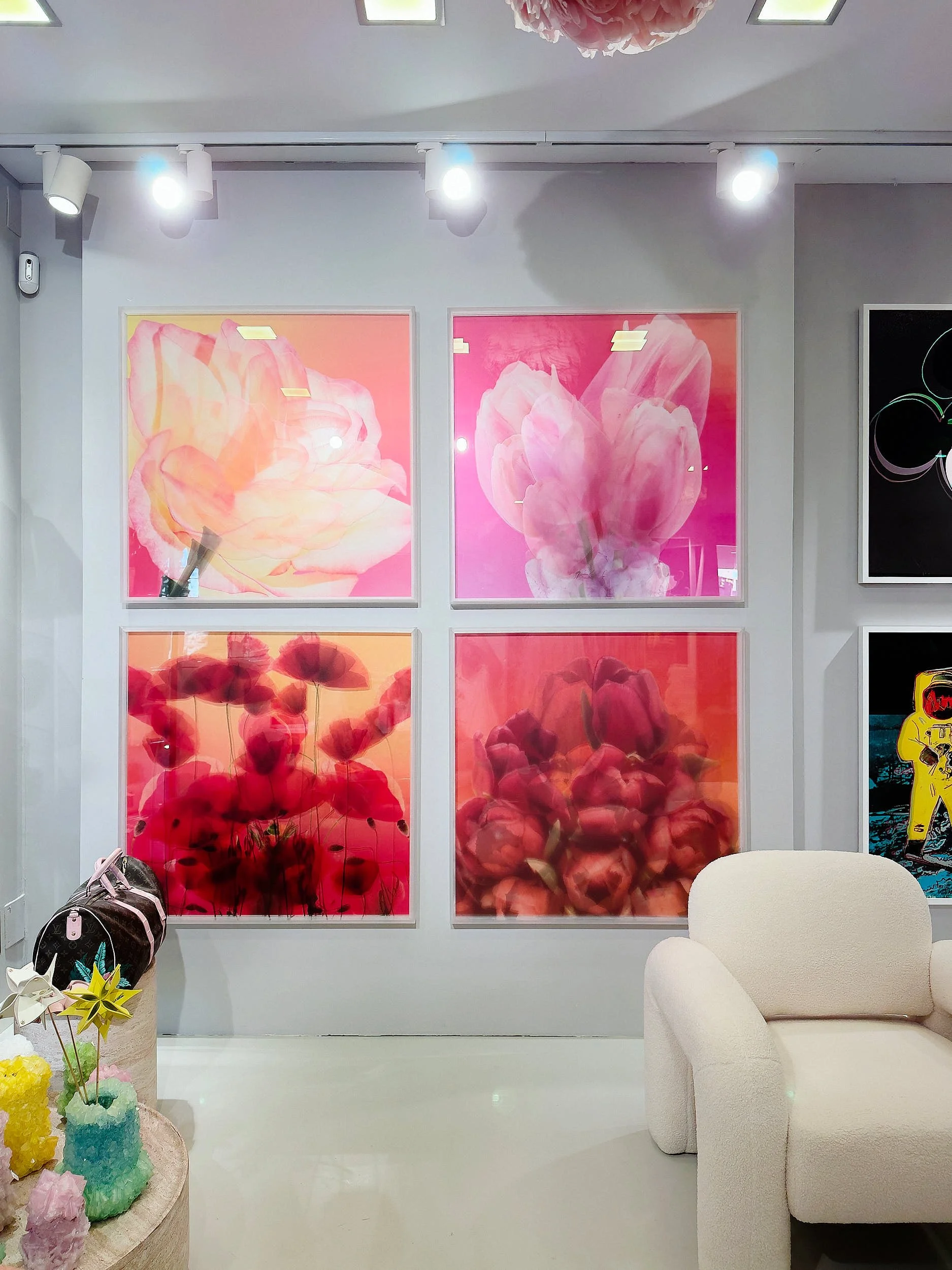
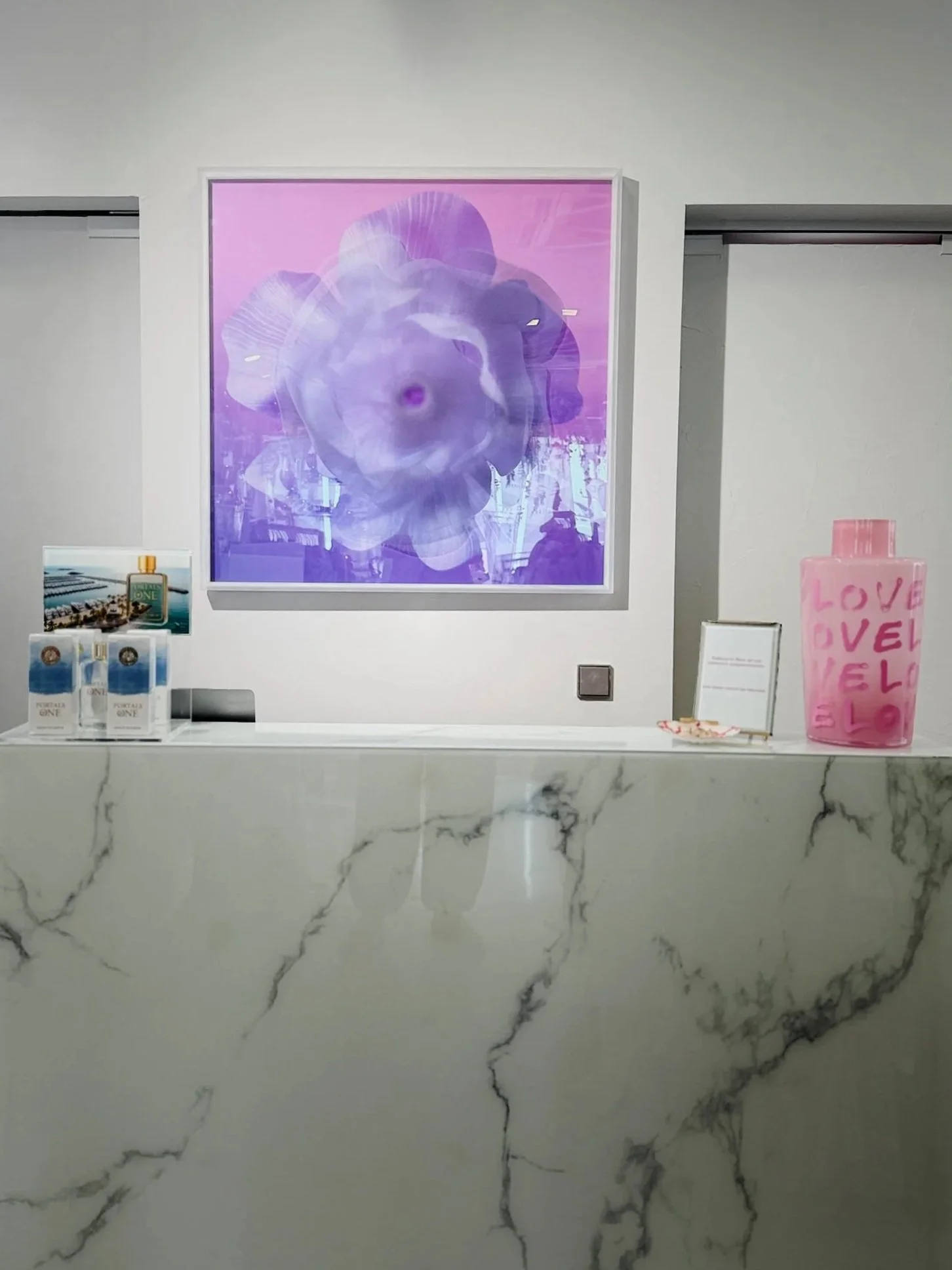
Adrian Bedoy translates the kinetic energy of global urban environments into a refined, multidimensional visual language. Born in Bucharest and based in Düsseldorf, Bedoy merges the disciplines of photography, philosophy, and object art to pioneer an innovative aesthetic framework he defines as "Perspectivism." His work fundamentally challenges the two-dimensionality of traditional photography by inviting the viewer into a dynamic, physical relationship with the artwork.
Bedoy is most widely recognized for his ongoing, globally acclaimed series #throughgermaneyes. In these works, large-scale urban and architectural motifs are meticulously constructed using multiple, handcrafted layers of acrylic glass. This highly technical, transparent layering process creates a profound three-dimensional depth, resulting in sculptural photographic works that continuously shift and reveal new narratives depending on the viewer's physical vantage point and the surrounding light. For Bedoy, the canvas is never white, but inherently transparent—a medium that does not merely depict a space, but actively defines it.
His unique ability to capture and deconstruct the modern zeitgeist has secured him significant international and institutional recognition. Bedoy’s works have been exhibited at prominent global venues, including the National Art Gallery in Kuala Lumpur, the State Parliament of North Rhine-Westphalia in Düsseldorf, Espace 22 in Monaco, and the historic Museum Bundesbankbunker in Cochem.
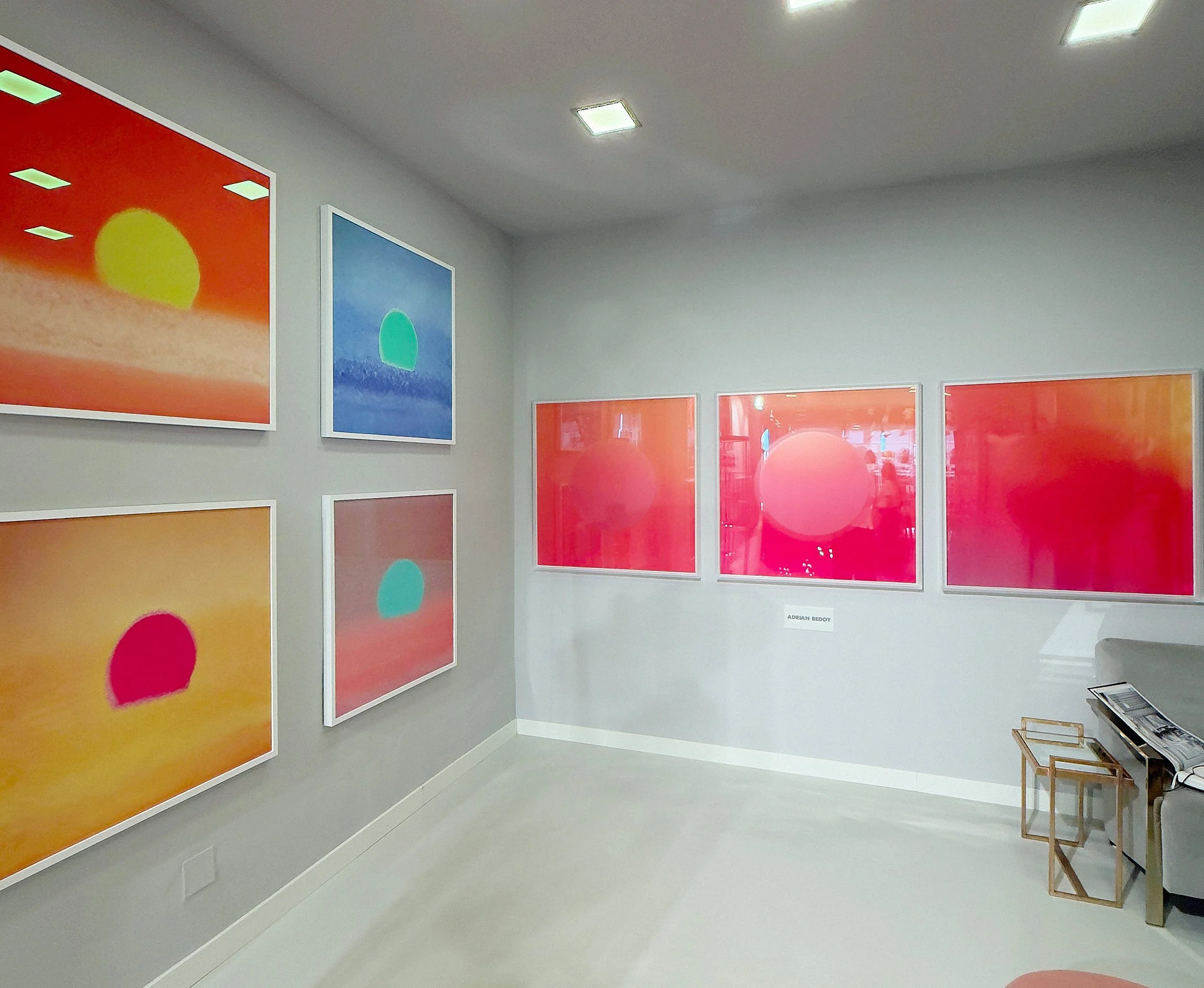
Operating at the vanguard of contemporary object photography, Bedoy’s work establishes a compelling, fresh dialogue with the established icons of the late 20th century. This profound intersection of eras was most notably highlighted in the critically acclaimed 2026 dual exhibition "Two Perspectives on Light," hosted precisely here at the Pink Panthers Collectors Club in Puerto Portals, Mallorca. By curating Bedoy’s contemporary, light-bending layered photography in direct, striking conversation with the historic works of Andy Warhol, the exhibition cemented his position as an artist who seamlessly bridges the gap between innovative contemporary design and blue-chip art history.
-
Alemais cultivates a visual language deeply rooted in artisanal techniques and historical botanical motifs. Founded in 2020 by Australian designer Lesleigh Jermanus, the brand rapidly ascended the ranks of contemporary luxury by offering a profound antidote to fast fashion. Jermanus, leveraging her deep background in high-end design, built the brand on a foundation of ethical production and the preservation of historic crafting techniques. The brand’s garments act as fluid canvases, merging sustainable practices with a romantic, distinctively contemporary aesthetic. Characterized by intricate embroideries, patchworks, and hand-painted prints, Alemais reintroduces a sense of tactile wonder and environmental consciousness to the modern wardrobe.
-
Andy Warhol’s work defined a new visual vocabulary for the late 20th century, transforming everyday imagery into the language of high art with exacting technique and conceptual rigor. Emerging from a successful career as a commercial illustrator in the 1950s, Warhol founded "The Factory" in New York in 1962—a radical studio that functioned as both an artistic laboratory and a social epicenter for intellectuals, drag queens, playwrights, and Hollywood celebrities. Through his pioneering use of the photographic silkscreen process, Warhol examined the intersections of commerce, celebrity, and mass production. His legendary 1962 exhibition at the Ferus Gallery in Los Angeles, featuring the 32 Campbell’s Soup Cans, effectively launched Pop Art into the American mainstream. His obsessive serialization of figures like Marilyn Monroe and Elvis Presley invited sustained reflection on how images are circulated and consumed, a legacy cemented by the historic auction of his Shot Sage Blue Marilyn (1964), which sold for $195 million, making it the most expensive 20th-century artwork ever sold at auction.
-
Operating under a veil of strict anonymity, Banksy utilizes subversive stencil graffiti to dismantle institutional power and political hypocrisy. Emerging from the Bristol underground scene in the late 1990s, his work evolved from freehand graffiti to the highly detailed, rapid-execution stencils necessitated by the illegal nature of his practice. Banksy's ephemeral, globally dispersed works transform the urban landscape into a monumental canvas for acute socio-political commentary. He has consistently disrupted the traditional art market apparatus, most famously in 2018, when his painting Girl with Balloon self-destructed through a shredder hidden in its frame moments after selling at Sotheby’s for over $1.4 million. The newly created work, instantly retitled Love is in the Bin, later resold for $25.4 million, epitomizing his unique ability to critique the market while simultaneously dominating it.
Banksy's ephemeral, globally dispersed works transform the urban landscape into a monumental canvas for acute socio-political commentary. He has consistently disrupted the traditional art market apparatus, most famously in 2018, when his painting Girl with Balloon self-destructed through a shredder hidden in its frame moments after selling at Sotheby’s for over $1.4 million. The newly created work, instantly retitled Love is in the Bin, later resold for $25.4 million, epitomizing his unique ability to critique the market while simultaneously dominating it.
-
Blaken disrupts the conservatism of haute horlogerie by applying bespoke, high-tech metallurgical transformations to iconic timepieces. Founded in Germany, the company utilizes a proprietary Diamond-Like Carbon (DLC) coating process—a technology originally developed for aerospace and extreme motorsport engineering—to harden and visually transform standard luxury watches. The brand masterfully merges the permanence of heritage watchmaking, such as Rolex and Patek Philippe, with the exclusivity of hyper-individualized, contemporary stealth design. By customizing highly sought-after, waitlisted models, Blaken caters to a new generation of avant-garde collectors who demand absolute uniqueness and industrial resilience without compromising the underlying mechanical pedigree of the original manufacture.
-
Blancha revolutionizes the traditional concept of shearling outerwear. Founded in Italy in 2005 by Luca Zanini, the brand was conceived to dismantle the stigma of shearling as a heavy, cumbersome material meant only for extreme winter climates. Zanini applied the techniques of high-end prêt-à-porter tailoring to shearling pelts, completely reimagining their potential. By treating shearling with the fluidity of silk or fine wool, the brand creates coats that are unexpectedly weightless and fiercely contemporary. Blancha is characterized by bold color-blocking, oversized proportions, and an aesthetic that merges the ruggedness of natural pelts with the sharp, graphic lines of Italian avant-garde fashion.
-
Blazé Milano deconstructs and perfects the quintessential blazer. Founded in 2013 by Corrada Rodriguez d'Acri, Delfina Pinardi, and Sole Torlonia—three former fashion editors at Elle Italia—the brand is built on a singular obsession: creating the perfect jacket. Drawing inspiration from equestrian tailoring and naval uniforms, the founders sought to empower women with a garment of absolute structural integrity. Through rigorous Italian tailoring and its signature curved "Smiley" pocket, the brand transforms a staple garment into a profound statement of sartorial independence. Blazé Milano proves that true luxury lies in specialization; by doing one thing with absolute perfection, they have created an indispensable uniform for the modern, cosmopolitan woman.
-
Mr. Brainwash appropriates the visual language of street art and pop culture, creating a frenetic, hyper-referential pastiche. Originally a vintage clothing store owner in Los Angeles, Guetta was thrust into the art world's consciousness as the subject of Banksy’s Academy Award-nominated 2010 documentary, Exit Through the Gift Shop. The film chronicled his sudden, meteoric evolution from an amateur videographer to a commercially dominant pop artist. His breakthrough 2008 Los Angeles exhibition, Life is Beautiful, generated millions in sales within days, aggressively challenging the concepts of artistic authenticity, originality, and the commercialization of the underground art movement. By heavily remixing the iconography of Warhol, Banksy, and Haring, Mr. Brainwash acts as a mirror to a society obsessed with spectacle, celebrity, and mass-produced nostalgia.
-
Canessa translates a free-spirited, bohemian ethos into the highly demanding realm of ultra-luxury knitwear. Founded in 2019 by Guia Canessa, the brand is deeply inspired by the nomadic, artistic lifestyle of the 1970s, specifically the vibrant energy of Ibiza and the Mediterranean coast. The brand is characterized by its kaleidoscopic, psychedelic patterns and meticulous Italian looming techniques, often utilizing recycled cashmere yarns to promote sustainability. The resulting garments are pieces of profound tactile richness—luxurious, weightless cardigans and dusters that encapsulate the feeling of endless summer and effortless, artistic wealth.
-
Chanel revolutionized the modern silhouette by introducing principles of structural simplicity and sartorial liberation. Founded by Gabrielle "Coco" Chanel in 1910, the house aggressively dismantled the corseted, restrictive fashions of the Belle Époque. By introducing jersey fabrics, the Little Black Dress in 1926, and the revolutionary 2.55 quilted flap bag in 1955, Chanel engineered the modern woman's uniform. Following the founder's death, the house experienced a monumental renaissance under the creative direction of Karl Lagerfeld from 1983 until 2019. Lagerfeld brilliantly reinterpreted Chanel's austere, modernist elegance into a highly desirable vocabulary of tweed, interlocking CCs, and flawless proportion. Today, the house remains a fiercely independent titan of Parisian haute couture, maintaining absolute control over its artisanal supply chains (the Métiers d'Art).
-
Cult Gaia creates sculptural wearable art that intentionally blurs the line between accessory and architecture. Founded in 2012 by Jasmin Larian in Los Angeles, the brand experienced a meteoric rise to global prominence in 2016 with the release of the "Ark" bag. Constructed from bamboo and designed to mimic architectural scaffolding, the Ark became a viral sensation, fundamentally shifting the contemporary accessories market toward organic, unbranded shapes. Today, the brand's garments and accessories act as enduring objets d'art. Defined by strict geometric precision, negative space, and unexpected materials, Cult Gaia operates on the philosophy that true luxury is found in creating visually arresting pieces that demand to be displayed as much as they are worn.
-
A master of visual dynamics, Dieter Blum’s photography captures the kinetic energy of human movement and cultural iconography. He achieved global prominence in the late 20th century, most notably shaping the visual identity of the legendary Marlboro Man advertising campaigns, capturing the rugged mythology of the American West with unparalleled cinematic grandeur. Beyond his commercial success, Blum’s exacting compositions elevate human subjects into profound, timeless studies of physical form. His landmark 1990s project documenting the Berlin Philharmonic under the batons of Herbert von Karajan and Claudio Abbado revealed the intense, visceral athleticism of classical musicians. His work stands as a monumental bridge between high-impact commercial photography and classical artistic portraiture.
-
Extreme Cashmere strips luxury knitwear down to its most essential, egalitarian form. Founded in Amsterdam in 2016 by Saskia Dijkstra, who spent decades producing cashmere for top luxury houses, the brand was born out of frustration with the restrictive sizing, seasonal obsolescence, and declining quality of the traditional fashion industry. By eschewing traditional seasons, genders, and sizes (offering exclusively "one-size" garments), the brand focuses entirely on the architectural drape and uncompromising purity of premium Mongolian cashmere. Extreme Cashmere operates on a radical philosophy of inclusion and absolute material supremacy, creating modern, indestructible staples that adapt to the wearer’s body over a lifetime.
-
Masters of material innovation, Fendi blends Roman architectural heritage with an audaciously modern sensibility. Founded by Adele and Edoardo Fendi in Rome in 1925 as a fur and leather workshop, the house's trajectory was forever altered in 1965 when a young Karl Lagerfeld was appointed Creative Director. Lagerfeld conceptualized the iconic double-F logo (originally standing for "Fun Furs") and revolutionized the treatment of fur, transforming it from a heavy, traditional garment into a lightweight, fashionable textile. The house is defined by its dualistic approach, balancing profound artisanal tradition with boundary-pushing design. In 1997, Silvia Venturini Fendi designed the Baguette, arguably the first true "It bag" in modern fashion history, which fundamentally changed the accessory market. Today, Fendi continues to command the highest echelons of Italian luxury, defined by its tactile supremacy and deep ties to Roman art and architecture.
-
FRS elevates the private realm of loungewear into the public sphere of high fashion. Founded in Milan in 2015 by Francesca Ruffini, the brand was born from a singular, audacious vision: to take the traditional silk pajama—an item strictly confined to the bedroom—and recontextualize it as highly sophisticated, red-carpet-worthy eveningwear. Utilizing sumptuously printed Italian silks sourced from the historic mills of Como, the brand challenges traditional sartorial boundaries. By applying impeccable alta moda tailoring to sleepwear silhouettes, FRS turns intimate apparel into bold, highly conceptual statements, creating a wardrobe for the globally nomadic, intellectually curious elite.
-
A master of visual ambiguity, Gerhard Richter explores the profound tension between abstraction and figuration. After fleeing East Germany for Düsseldorf in 1961, Richter abandoned the dogma of Socialist Realism, establishing a style he ironically termed "Capitalist Realism" alongside peers like Sigmar Polke. He quickly gained international acclaim for his blurred photo-paintings, which meticulously replicated amateur photographs and newspaper clippings, questioning the reliability of the photographic image in contemporary society.
-
Gianvito Rossi is the purveyor of absolute geometric perfection in footwear. Launching his eponymous label in Milan in 2006, Rossi inherited the profound shoemaking legacy of his father, Sergio Rossi. However, Gianvito forged his own distinct path, moving away from excessive ornamentation to focus on the pure, unadulterated architecture of the shoe. His designs eschew heavy embellishment in favor of flawless proportions, elongating lines, and absolute structural integrity. Famous for creations like the minimalist "Portofino" sandal, Rossi defines the modern architectural standard for the stiletto. His work is a masterclass in "less is more," ensuring that the shoe frames the foot with elegant precision rather than overwhelming it.
-
Giuseppe di Morabito merges traditional Italian tailoring with an audacious, crystal-embellished aesthetic. Founded in Milan in 2015, the young designer quickly captured the attention of the global fashion elite by reintroducing a sense of unapologetic, high-octane glamour to the contemporary wardrobe. His work is a masterclass in theatricality, heavily utilizing crystal mesh, intricate ruching, and dramatic floral appliqués. While the visual impact is intensely modern and viral-ready, the garments are underpinned by rigorous, old-world Italian dressmaking techniques. Giuseppe di Morabito designs for the contemporary muse who commands the room, blending historical romanticism with nocturnal, club-ready energy.
-
Guest in Residence recontextualizes heritage knitwear for a new generation. Founded in 2022 by international supermodel Gigi Hadid, the brand disrupts the direct-to-consumer market by offering uncompromising, 100% cashmere garments that are designed to be passed down through generations. The label champions the longevity and tactile warmth of premium natural fibers over synthetic, trend-driven fast fashion. By blending classic, nostalgic silhouettes with a vibrant, contemporary color palette, Guest in Residence designs modern heirlooms that bridge the gap between supreme domestic comfort and refined, street-ready elegance.
-
A profound symbol of mid-century motorsport dominance, the Gulf Racing heritage transcends its industrial oil origins. The iconic powder-blue and marigold livery, first introduced in the late 1960s under the backing of Gulf Oil executive Grady Davis, became immortalized during the golden era of endurance racing, draped over legendary machines like the Ford GT40 and the Porsche 917 at the 24 Hours of Le Mans. Cemented in global pop culture by Steve McQueen in his 1971 cinematic masterpiece Le Mans, the Gulf aesthetic endures today as a masterful study in iconic, high-contrast graphic design. It represents an era of analog danger, mechanical purity, and absolute racing supremacy, maintaining its status as the most recognizable and revered livery in automotive history.
-
Hermès embodies the absolute pinnacle of artisanal integrity. Founded in Paris in 1837 by Thierry Hermès as a master harness and saddle workshop for European nobility, the house has steadfastly refused the mass-production models adopted by its contemporaries. Instead, it creates objects of enduring permanence, prioritizing meticulous hand-craftsmanship and material purity. The house’s legacy is defined by its architectural leather goods, most notably the Kelly bag (renamed for Grace Kelly in 1956) and the Birkin bag, conceived in 1984 following a chance encounter between actress Jane Birkin and Hermès executive Jean-Louis Dumas. These pieces are not merely fashion items but robust asset classes, representing the ultimate triumph of quiet luxury, absolute scarcity, and uncompromising historic craftsmanship.
-
Merging traditional graffiti aesthetics with razor-sharp stencil work, HiJACK captures the zeitgeist of contemporary anxieties. As the son of Thierry Guetta (Mr. Brainwash), HiJACK was raised immersed in the epicenter of the early 21st-century street art explosion. However, he quickly forged a distinct, highly critical visual identity that distances itself from pure pop appropriation. His pieces offer a witty, highly critical interrogation of modern environmental crises, technological dependence, and societal paradigms. Following his critically acclaimed 2013 debut exhibition at the Mead Carney Fine Art gallery in London, HiJACK has established himself as a mature, incisive voice in the next generation of urban contemporary art, balancing raw street-level execution with refined gallery curation.
-
Jeff Koons challenges the established boundaries of taste, commerce, and banality. Drawing on his early experiences as a Wall Street commodities broker in the 1980s, Koons possesses an unparalleled understanding of desire and the contemporary consumer psyche. He first disrupted the art world with his Equilibrium series (1985), featuring basketballs suspended in tanks of water, before transitioning to the monumental, hyper-polished sculptures that would define his career. By monumentalizing everyday objects and pop culture icons in flawless, mirror-polished stainless steel, Koons forces a provocative confrontation with the aesthetics of late capitalism. His seminal Celebration series, initiated in the 1990s, produced the globally recognized Balloon Dog sculptures. In 2019, his 1986 stainless steel sculpture Rabbit sold for $91.1 million at Christie’s, shattering the auction record for a living artist and securing his position as the most polarizing and financially successful sculptor of his generation.
-
nder visionary creative direction, this historic Spanish leather house has been radically recast as a crucible of intellectual fashion. Founded in Madrid in 1846 as a cooperative of leather artisans, Loewe is one of the world’s oldest major luxury houses. It became the official supplier to the Spanish Royal Crown in 1905, establishing a reputation for unparalleled mastery in skin manipulation and leathercraft. Following its acquisition by LVMH in 1996, the house underwent a seismic shift with the appointment of Jonathan Anderson as Creative Director in 2013. Anderson transformed Loewe into an art-centric, avant-garde powerhouse, championing global craft traditions through the establishment of the Loewe Foundation Craft Prize. Today, the house continually pushes the boundaries of surrealist, highly sculptural silhouettes, making it the preferred brand for the global art and design intelligentsia.
-
Synonymous with the art of travel, Louis Vuitton was established in Paris in 1854 as a master trunk-maker, revolutionizing travel logistics with the invention of the flat-topped, stackable canvas trunk. The introduction of the iconic Monogram canvas in 1896 by Georges Vuitton cemented the brand's visual identity, initially designed to thwart counterfeiters, yet destined to become the most recognizable motif in global luxury. Today, the house marries rigorous heritage craftsmanship with avant-garde artistic collaborations. Under the transformative tenures of artistic directors like Marc Jacobs, Virgil Abloh, and Pharrell Williams, Louis Vuitton has continually redefined the intersection of historic luxury, streetwear, and contemporary cultural movements. Landmark collaborations with artists such as Takashi Murakami, Yayoi Kusama, and Richard Prince have blurred the boundaries between high fashion and the blue-chip art market.
-
Magda Butrym redefines modern femininity through a lens of Eastern European craftsmanship. Launched in Warsaw in 2014, Butrym sought to resurrect the fading artisanal techniques of her native Poland, specifically traditional leather plaiting, hand-crochet, and intricate embroidery. The brand achieved almost immediate global recognition, championed by fashion editors and supermodels for its fiercely independent aesthetic. Her work juxtaposes sharp, oversized, masculine tailoring with delicate, hand-woven floral appliqués, creating a powerful, subversive silhouette. Magda Butrym represents the vanguard of a new luxury paradigm—one that eschews traditional Parisian or Milanese origins in favor of reviving localized, highly skilled artisanship with a razor-sharp, contemporary attitude.
-
A pivotal figure in the American Pop Art movement, Mel Ramos merged the idealized female nude with blatant commercial branding. Emerging in California in the early 1960s, Ramos exhibited alongside Andy Warhol, Roy Lichtenstein, and James Rosenquist in the landmark 1963 LACMA exhibition Pop Goes the Easel, which formally institutionalized the movement on the West Coast. His precise, highly stylized paintings offer a satirical yet seductive critique of advertising, commodification, and the American consumer dream. By rendering pin-up models emerging from oversized Coca-Cola bottles, Chiquita bananas, or Hav-A-Tampa cigars, Ramos exposed the inherent eroticism used by Madison Avenue to sell everyday goods. His work remains a crucial, provocative bridge between classical figure painting and mid-century commercial illustration.
-
OUD Paris synthesizes the effortless nonchalance of Parisian style with a bold, contemporary edge. Founded in 2018 by Raphael Chabanel and Patricia Bitton, the brand bridges the gap between high-octane eveningwear and refined daywear. The founders drew inspiration from the vibrant nightlife of the 1970s and the sophisticated ease of French tailoring. The brand focuses on fluid draping, deep saturated colors, and vibrant, high-contrast textiles to create a modern narrative of sophisticated eveningwear. OUD Paris caters to a clientele that demands versatility without sacrificing dramatic impact, offering garments that transition seamlessly from a gallery opening to a high-profile dinner.
-
Representing the absolute zenith of traditional Genevan watchmaking, Patek Philippe was founded in 1839 by Antoine Norbert de Patek and François Czapek, later joined by inventor Jean-Adrien Philippe. The manufacture is characterized by unparalleled mechanical complexity, having created some of the most complicated timepieces in human history, including the legendary Henry Graves Supercomplication in 1933. Their timepieces are conceived not merely as instruments of time, but as generational heirlooms preserving the highest echelon of horological art. Operating under the philosophy that one never truly owns a Patek Philippe but merely looks after it for the next generation, the family-owned house continues to break global records, exemplified by the 2019 sale of the one-of-a-kind Grandmaster Chime for $31 million, the highest price ever paid for a watch at auction.
-
Rene Staud revolutionized automotive photography through his mastery of artificial light systems. In 1983, he developed the "Magicflash" system, a groundbreaking surface-lighting technology that eliminated unwanted studio reflections and allowed for the perfect illumination of highly polished automotive bodies. His hyper-realistic, sculptural depictions of iconic automobiles transform industrial design into objects of pure aesthetic veneration. Staud has created the definitive visual archives for luxury marques such as Porsche, Aston Martin, and Mercedes-Benz. His ability to isolate the automobile from its functional context, presenting it instead as a flawless, aerodynamic sculpture, has made him one of the most collected commercial photographers of the modern era.
-
An institution of Italian knitwear, Roberto Collina distills decades of technical mastery into understated, tactile garments. Founded in the 1950s as a family-owned workshop near Bologna, Italy, the company spent decades operating behind the scenes, manufacturing ultra-high-end knitwear for some of the world's most prestigious luxury houses. Transitioning into a formidable autonomous label, the brand represents the quiet luxury of uncompromising material quality and seamless, artisanal construction. Utilizing the finest mohair, cashmere, and alpaca, Roberto Collina completely rejects logo-centric fashion, focusing instead on the architectural drape, innovative looming techniques, and the profound physical sensation of wearing a perfectly constructed Italian garment.
-
Rolex occupies a singular position at the intersection of design and art, a house where rigorous engineering converses with an almost ascetic formal language. For decades the brand has refined a visual and material vocabulary that is instantly legible: oyster cases shaped by functional necessity and aesthetic restraint; bezels that balance surface, scale and light; dials that reduce information to its essential geometry. These are objects of utility that achieve the quiet monumentality of well-resolved design.
Seen through the lens of contemporary curation, a Rolex is less a fashion accessory than a compact sculpture—an alloyed study in proportion, finish, and the choreography of small mechanical movements. Its surfaces are worked as a painter works a canvas: brushed and polished planes alternate to control glare and silhouette; applied indices and hands are placed with the same deliberation a sculptor brings to negative space. The crown, the fluted bezel, the distinctive lugs—each motif operates like a recurring motif in an artist’s oeuvre, recognized across decades and iterations, accruing meaning through repetition and refinement.
Rolex’s approach to materiality is notable in museum terms. The brand’s long-standing experimentation with proprietary alloys and finishes speaks to a practice that treats metallurgy as medium. Gold is not merely precious ornamentation but a medium calibrated for tone and wear; steel is chosen and finished to hold a surface for generations; ceramic and sapphire are integrated with a conservator’s respect for permanence. The patina that may develop in time—on leather straps or older dials—further transforms the object into a living artifact, an index of lived time that complements the watch’s internal chronometry.
There is also an institutional logic to Rolex’s design language: clarity and reliability are elevated to cultural values. The dial’s typography, the choice of luminous compound, the scale of numerals—all are governed by legibility and endurance. Yet this functionalism does not preclude expressivity. Consider the subtlety of color in Rolex dials: glacé blues, tropical browns, deep blacks that shift with ambient light—each hue modulates mood as a curator might select lighting to coax out hidden tones in a canvas. Special editions and historic references function as serialized variations on a theme, like prints in an artist’s portfolio.
Rolex’s contribution to design discourse is also institutional. The brand’s historical alignment with exploration—diving, aviation, polar expeditions—has generated forms that are both archetypal and aspirational. The watch becomes an emblem of mastery over environment, a small-scale monument to human ingenuity. In galleries and museums, timepieces of this lineage read as artifacts of modernity: they speak to the mid-century project of designing objects that combine democratic rigor with technological excellence.
From a curatorial perspective, exhibiting Rolex pieces alongside works of art invites dialogue about scale, function and the aesthetics of precision. Placed adjacent to Minimalist sculptures, Rolexes underscore the economy of form; shown with photographic studies of labor and industry, they emphasize the hand and the machine in tandem. In groupings where historical and contemporary examples coexist, one can trace a genealogy of taste—how subtle shifts in proportion or bezel texture map broader cultural changes.
Ultimately, Rolex demonstrates how design, when disciplined by purpose and mastered by craft, attains a kind of cultural authorship. The watches are not merely instruments; they are designed experiences that register as objects of longing and study. As with any serious art object, they reward close looking: the tiny, intentional decisions that define a model reveal themselves only with time and attention, and in that slow apprehension they convert utility into the aesthetics of endurance.
The definitive archetype of the mechanical tool watch, Rolex was founded in London in 1905 by visionary Hans Wilsdorf before relocating to Geneva. The brand fundamentally changed watchmaking history in 1926 with the invention of the "Oyster," the world's first waterproof wristwatch, famously worn by Mercedes Gleitze during her 1927 swim across the English Channel. Rolex combines relentless chronometric precision with a design language so enduring it has transcended traditional horology to become a universal symbol of human achievement. From the Submariner conquering the ocean depths to the Cosmograph Daytona dominating the race track—highlighted by the historic 2017 auction of Paul Newman’s personal Daytona for $17.7 million—Rolex represents the absolute zenith of functional luxury and investment-grade timekeeping.
-
RVS Jets represents the absolute apex of bespoke aviation logistics. Operating in an era where time and privacy are the ultimate luxury commodities, the company bridges the gap between supreme technological engineering and hyper-personalized high-end hospitality. Far beyond traditional charter brokerage, RVS Jets curates an atmosphere of uncompromising privacy and spatial luxury above the clouds. By providing seamless, end-to-end global connectivity for the world’s most discerning collectors, executives, and artists, the firm ensures that the environment at 40,000 feet is executed with the same exacting standards, security, and aesthetic refinement found in the world’s leading galleries and five-star institutions.
-
The Mannei commands attention through exacting tailoring and powerful, highly structured silhouettes. Founded in Warsaw in 2020 by Sara Boruc Mannei, the brand exploded onto the global luxury scene, propelled by its masterful handling of premium leathers and its signature oversized outerwear, most notably the cult-favorite "Amman" blazer. The label reinterprets classic sartorial staples with a subversive, ultra-luxurious edge. Rejecting delicate, overly feminized shapes, The Mannei designs for a commanding contemporary presence. The brand's rapid adoption by the world's most influential fashion figures underscores a shifting desire toward assertive, meticulously constructed power-dressing.
-
Utzon approaches leather and shearling with strict architectural rigor. A pillar of Danish design heritage, the brand was established in 1990 by Pernille Utzon. It translates the Scandinavian philosophy of functional minimalism—often associated with the region's iconic mid-century furniture and architecture—directly into the realm of luxury outerwear. The brand’s pieces are characterized by their minimalist geometry, reversible functionality, and an unwavering commitment to the tactile superiority of natural, sustainably sourced materials. Utzon strips away unnecessary hardware and embellishments, allowing the raw, unparalleled quality of the shearling to speak for itself, creating garments that are visually serene yet incredibly robust.
-
Zimmermann masters the complex interplay of architectural garment construction and ethereal femininity. Founded in Sydney in 1991 by sisters Nicky and Simone Zimmermann, the brand began by selling at local markets before making a historic debut at New York Fashion Week in 1999. They were among the first to bridge the gap between high-fashion swimwear and luxury ready-to-wear, pioneering the "resort luxury" aesthetic. The label’s intricate lacework, custom floral prints, and voluminous silhouettes construct a highly curated, opulent vision of modern romanticism. Zimmermann's meticulous attention to textile development and structural draping has elevated the brand from an Australian powerhouse to a permanent fixture on the global luxury stage, worn by international royalty and celebrities alike.
-
ROTI (Davide Rotondaro)
ROTI, born Davide Rotondaro in Winterthur, Switzerland, operates at the dynamic intersection of Contemporary Pop and Urban Art. His artistic foundation is deeply rooted in traditional craftsmanship: at the age of eleven, he began a multi-year apprenticeship under Juri Borodatchev, a Russian master painter and winner of the prestigious "Golden Brush" in Moscow. This intensive weekly training in classical painting techniques instilled in ROTI the highest level of precision, discipline, and dedication.
Today, he utilizes this classical foundation to create works of profound expressive power and a clear visual language. At the center of his current practice is the ongoing series Smile to Life. Here, ROTI appropriates the universal symbol of the smiley face, elevating it to his unmistakable artistic signature. In an often complex contemporary era, the artist consciously chooses a radically positive message: his works invite the viewer to approach life with optimism, lightness, hope, and emotional openness.
His mixed-media works on canvas—such as C'est la Vie (2024), It's Love (2025), and Break through (2026)—combine vibrant color palettes with the raw, urban energy of drip painting and graffiti elements. Furthermore, ROTI translates his visual vocabulary into physical space by creating high-gloss, metallic sculptures that perfectly transpose the pop art aesthetic into the three-dimensional realm.
With a rapidly growing international presence and exhibitions at renowned platforms such as Aqua Art Miami (2026), Art International Zurich (2026), and Arte y Moda in Mallorca (2025), ROTI has firmly established himself in the contemporary art scene. His art stands as a cross-cultural invitation to consciously perceive and celebrate the joy of everyday life.